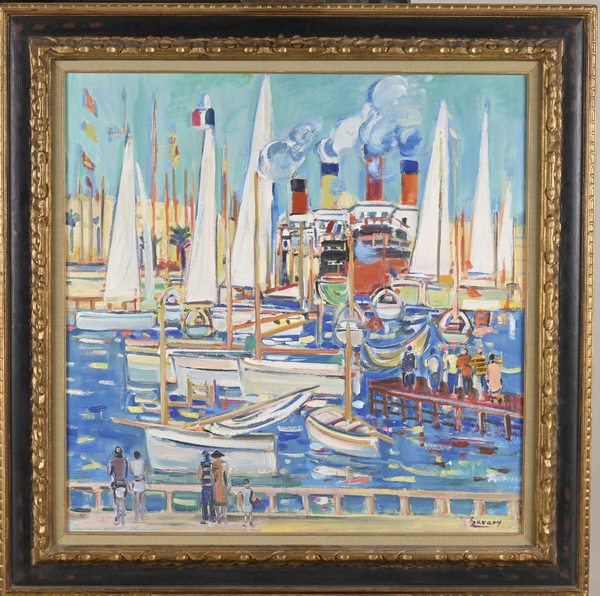
Artist: Savary, Robert
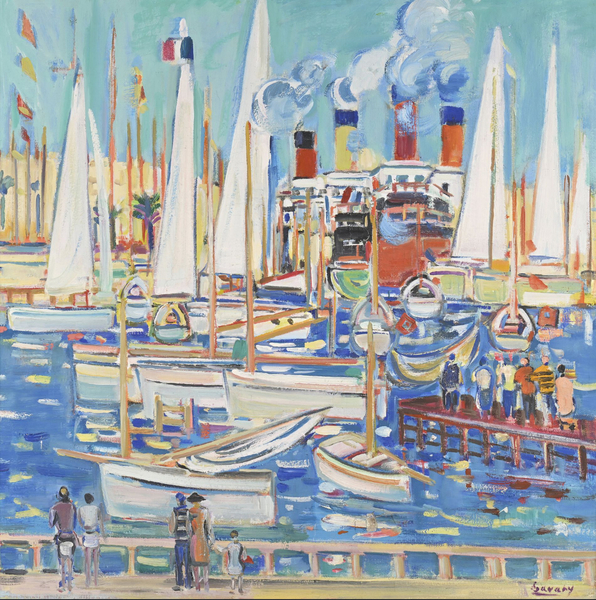
Biography
Robert Savary (1920–2000) was a French painter and lithographer, a major figure of the New School of Paris, whose figurative work is distinguished by a luminous palette and poetic sensibility.
Education and Early Life
Born on April 20, 1920, in Paris, Robert Gaston Savary showed an early aptitude for drawing, encouraged by his mother. He studied at the École Boulle from 1935, then joined the École nationale supérieure des beaux-arts de Paris, where he studied under Fernand Sabatté, Nicolas Untersteller, and Maurice Brianchon.
In 1941, he participated in the first Salon des sous de trente ans at the Galerie Royale, alongside Lucien Fontanarosa, Pierre Lesieur, and Claude Schürr.
Awards and Career
Savary received the Casa de Velázquez Prize in 1948, then the First Grand Prix de Rome in 1950, jointly with Françoise Boudet. He stayed at the Villa Medici, where he further developed his artistic skills.
In 1957, he began teaching at the École Régionale des Beaux-Arts in Rouen, where he became honorary director. He was appointed Official Painter of the Navy in 1987.
Work and Style
A figurative artist, Savary was part of the "Jeune Peinture" movement of the Nouvelle École de Paris. His work, imbued with lyricism, celebrates light and color. He also created stained-glass windows for several churches in collaboration with master glassmaker Guy Quesneville.
Exhibitions and Collections
Savary exhibited regularly at the Salon Comparaisons in Paris for over forty years. His works are featured in public collections in France and abroad, notably at the Centre Pompidou.
Robert Savary died on May 28, 2000, in Petit-Quevilly, leaving behind a rich and luminous body of work, reflecting a life dedicated to painting.